
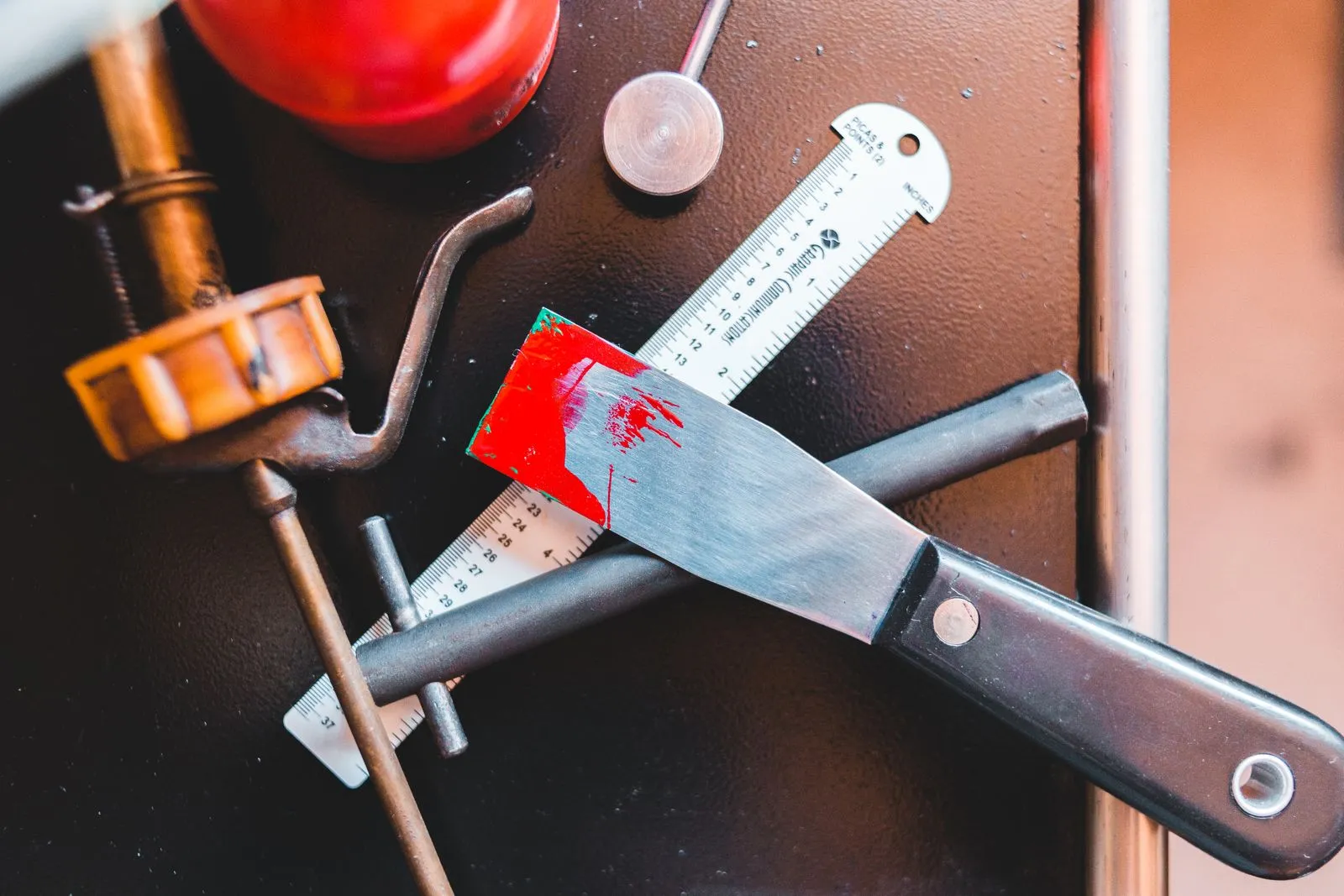
Printmaking creates images by transferring ink from a prepared surface onto paper or another material. The process can produce one-off impressions or a series of related prints, with each technique leaving its own marks, textures, and edges. Knowing the basics makes it easier to understand what you are seeing in a gallery or choose a process to explore. Here is a practical guide to several common printmaking techniques and the visual qualities they often create.
Relief: Woodcut and Linocut
In relief printing, the artist carves away the areas that should remain unprinted. Ink is rolled onto the raised surface, then paper is pressed against it. Woodcut uses a wood block, whose grain can contribute texture and direction to the image. The carved lines stay relatively bold, so the method suits strong shapes, clear contrasts, and graphic compositions.
Linocut follows the same basic principle but uses linoleum, which is generally smoother and has no wood grain. Artists can cut flowing curves and broad shapes into it, though fine details still require careful carving. Both methods can be printed by hand or with a press. Look for raised, inked areas translated into crisp forms, sometimes with slight variations between impressions.
Intaglio: Etching and Engraving
Intaglio reverses the relief process: ink sits in recessed lines or textures cut or etched into a plate. For etching, an artist coats a metal plate with a protective ground, draws through the coating, and exposes the revealed lines to an acid bath. After applying ink, the artist wipes the plate surface clean, leaving ink in the etched grooves to transfer under pressure.
Engraving also creates recessed lines, but the artist cuts them directly into the plate with a sharp tool. The method can produce controlled, fine marks, while etching allows lines that feel more freely drawn. Intaglio prints often show delicate line work and rich dark passages. A plate mark—a shallow rectangular impression around the image—may also be visible in the paper.
Planographic: Lithography
Lithography prints from a flat surface rather than raised or recessed areas. The artist draws with a greasy medium on a prepared stone or metal plate. Chemical treatment helps the surface accept ink where the drawing was made and repel it in the blank areas. Paper is then pressed against the inked surface to make the impression.
Because the artist draws directly onto the plate, lithography can preserve the feel of pencil, crayon, or brush marks. It works well for tonal passages and expressive lines that resemble drawing. The image does not come from carved grooves or raised shapes, so the print’s character depends on the marks and the way ink sits across the flat surface.
Stencil: Screen Printing and More
Screen printing pushes ink through open areas of a mesh screen while a stencil blocks the rest. Artists can make stencils by hand or use light-sensitive coatings to create detailed designs. Each color usually requires a separate screen, so careful alignment matters when colors overlap. The process can create clean edges, flat areas of color, and layered images on paper, fabric, and other surfaces.
Other methods include monoprinting, which produces a unique image from an inked plate, and monotype, where an artist paints or draws on a smooth surface before transferring the image. These terms are sometimes used differently by artists and printers, but both describe approaches with limited repeatability. When comparing prints, ask how the image was made and whether each impression is identical or intentionally varied.
Printmaking techniques differ in how artists prepare a surface and transfer ink, creating distinct lines, textures, and color effects. When viewing a print, notice its marks and ask about the process; that can reveal how the artist shaped the image. Visit Atlanta Print House to explore printmaking works in person and learn more about the techniques.